DQ Solar and Electrical has seen interest in installing EV charging stations grow exponentially in recent months.
Transport is Australia’s third-largest source of pollution, after power generation and manufacturing. Rising fuel costs are adding extra pressure on businesses and households alike, making Electric Vehicles (EVs) an increasingly attractive option for reducing energy expenses while cutting emissions.
EVs offer Australians an excellent opportunity to protect the environment, enjoy high-performance driving, and reduce reliance on petrol and diesel. Despite rapid EV adoption in the United States, China, and Europe, Australia has been slower to embrace the technology, partly due to limited government support and insufficient charging infrastructure.
Concerns about driving range and the availability of charging stations have contributed to slower EV sales. However, attitudes are shifting. The 2021 survey undertaken by the Electric Vehicle Council and Carsales Consumer Attitudes Survey found that 54% of Australians would consider purchasing an EV as their next car, reflecting growing awareness of the benefits of sustainable transport. In 2025, Carsales reported an increase of 37% of Australian consumers considering an EV in the future.
With rising fuel prices and an expanding EV infrastructure, now is the perfect time for Australian businesses and households to consider electric vehicles and invest in reliable EV charging stations. DQ Electrical and Solar can provide expert advice and professional installation to help you make the switch efficiently and sustainably.
Are you ready to transition your car into an Electric and Eco-friendly future?
We have seen enquiries triple compared to 12 months ago and started to install these modern EV charging devices right across Adelaide. DQ is excited to be at the forefront of this transport revolution, and with lower vehicle running costs, I am sure the popularity of Electric Vehicles (EVs) will only increase. DQ can supply and install the solutions of major suppliers, and due to our decades of high quality and technically challenging electrical work, our staff has been able to service these new EV requirements very well.
Don Quattrocchi
Director of DQ Solar and Electrical
3 MAJOR ELEMENTS
To consider when purchasing an EV
Charging power – Different electric cars need different amounts of energy. Many EV cars use around 12 to 16kWh of electricity to drive 100km, and at DQ, they can give recommendations on how to use solar energy to offset the running costs.
Also using solar power to charge EV vehicles will put less strain on the electrical grid and will help reduce vehicle emissions, it also can allow for excess solar to be absorbed instead of being exported to the grid for lower financial return.
Depending on the technology and battery used, some models may charge faster than others. This is why choosing a charging station based on the car manufacturers recommendation is very important allowing for efficient fast charging. DQ can advise on which charging station is right for your needs.
Professional Installation – Always engage a professional to connect your charging station. They’ll look at any existing sockets and cables you have to make sure they’re safe to use before your car is fully charged.
Furthermore, not all electricians are skilled in the construction of electric vehicle charging stations. Therefore, you should be certain that the person you engage is an expert in the field.
Reputable Supplier – There are many EV charger manufacturers on the market, but not all are efficient or reputable. DQ works closely with trusted and accredited suppliers, ensuring that every charging station we install meets strict quality, safety, and performance standards. This means you can rely on your EV charging setup for long-term, trouble-free operation.
The DQ quality focus guarantees quality electrical services
Many people’s views of electric vehicles in Australia are obsolete, and we hope to speed up the transition to a new mentality. Although electric vehicles are more expensive to purchase than petrol cars, they are less much expensive to operate. EV owners will save every km they drive.
An EV driver with a 15,000km driving range will see the annual energy cost at “$723, or $1,346 less than a petrol vehicle, at a cost of 30 cents per kilowatt hour” (Available at AGL discover).
Furthermore, when EV’s are compared to petrol and diesel engine cars, it can be seen, due to a lack of a combustion engine, filters and lubricants, that they require less maintenance and are less susceptible to mechanical problems.
Not only this, electric vehicles offer a better driving experience because the vehicles are quieter, smoother, and cleaner. The quieter battery engine also eliminates the noise and heat produced by gasoline and diesel engines.
EVs are also simple to use and provide a low-effort driving experience. The inherent silence of the car while driving also minimises stress in traffic.
Experts and consumers believe that EVs outperform internal combustion engine vehicles in terms of technical performance and the overall time in years that the engine will last. All these factors combine in an overall improvement in driving experience when using an electric vehicle.
Are electric vehicles environmentally friendly?
Of course, it is known that electric cars are meant to be better for the environment, but how exactly does owning and driving an EV can benefit the environment that surrounds you?
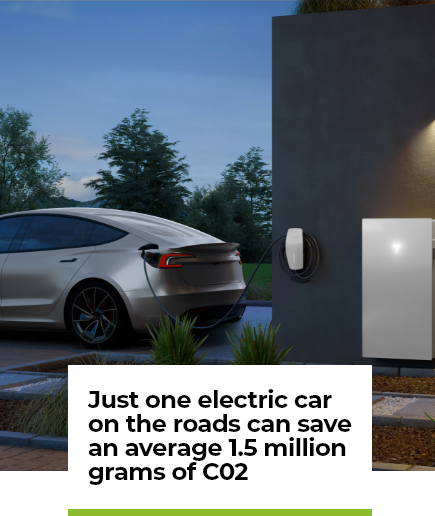
Firstly, pure electric cars produce no carbon dioxide emissions when they are driving. This allows for reduced air pollution. Studies have found that over a year, “just one electric car on the roads can save an average 1.5 million grams of C02”. (Available at EDF. 2021).
Furthermore, the use of these eco-friendly vehicles is able to reduce the demand for fossil fuels. This is because less demand for petrol leads to less demand for fossil fuel burning which in turn can also allow for a reduction in the intensity of climate change.
This offset in CO2 burning has to be squared against the energy required to manufacture the fuel cells, batteries and charging stations.
In past comparisons, EVs did come out ahead, as over the life of a motor car, a lot of fuel is being burned, compared to an EV – especially if the electric car is powered by a renewable energy system, located at the car owner’s home.
Can Solar Power and EVs support each other?
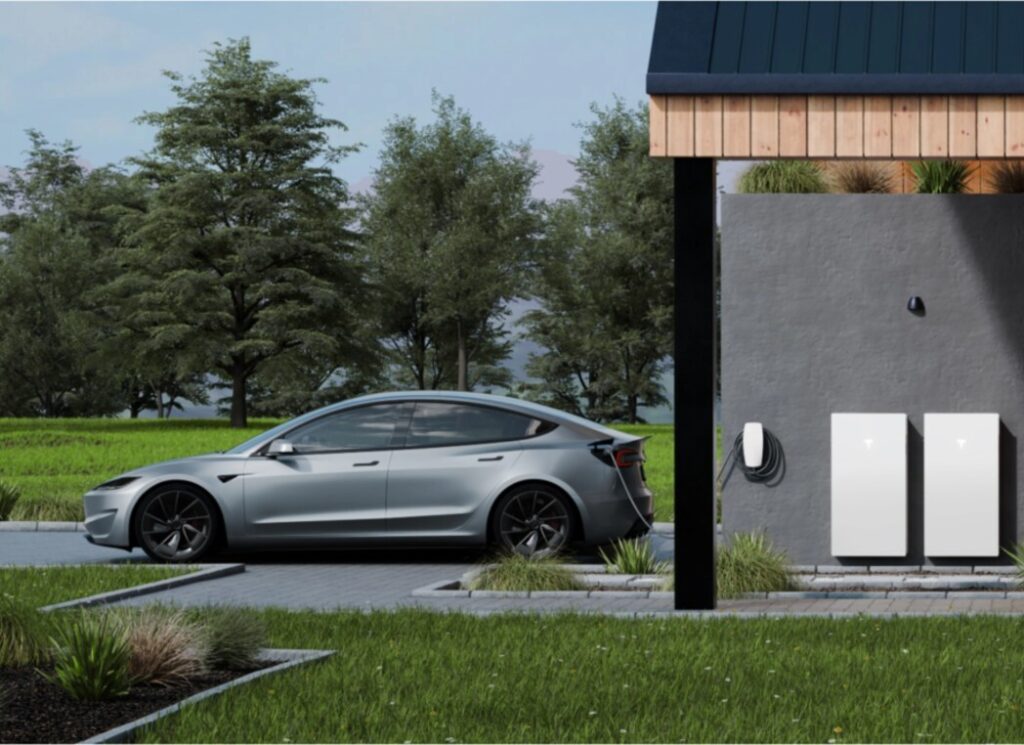
EV drivers can save even more when their charging station is powered by an efficient solar system. Depending on the panels installed, this setup can allow for near-free vehicle charging in addition to lowering your household electricity bills through energy generated by your home solar system.
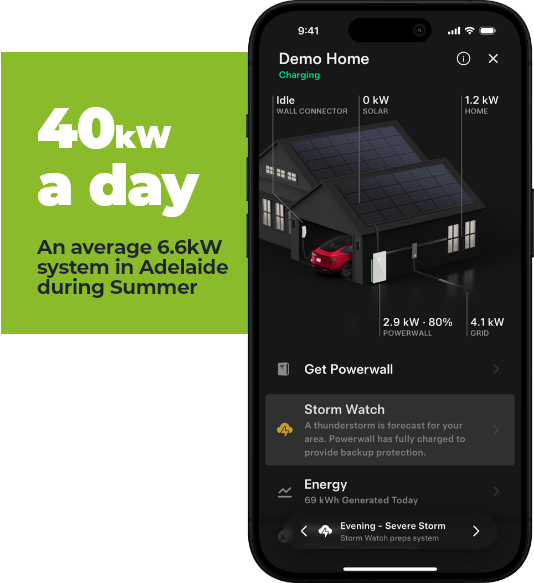
Assuming the average Australian drives roughly 50 km per day, an electric car such as a Tesla Model would require around 8 kWh of electricity to cover that distance. A typical 6.6 kW solar system in Adelaide during summer can produce approximately 40 kWh per day, enough to fully cover daily EV travel. This makes “free” vehicle transport possible while maximising the use of renewable energy.
With higher photovoltaic output in summer, charging multiple electric vehicles becomes simple—especially when your system is professionally installed by DQ Solar and Electrical. Our team ensures rooftop solar and home energy systems are configured for efficient, safe EV charging.
Pairing solar with a home battery allows you to plug in your EV when you return home, storing excess energy generated during the day. Overnight, your car charges smoothly and efficiently, eliminating the need to search for scarce public charging stations in the Adelaide area.
By morning, your electric vehicle is fully charged and ready for long-distance travel of up to 500 km. This solar-powered EV charging solution, installed by DQ Solar and Electrical, reduces stress for homeowners, supports energy independence, and eases demand on the electricity grid—while delivering cost-effective, sustainable transport for your family or business.